DIY Hair Masks & Budget Haircare

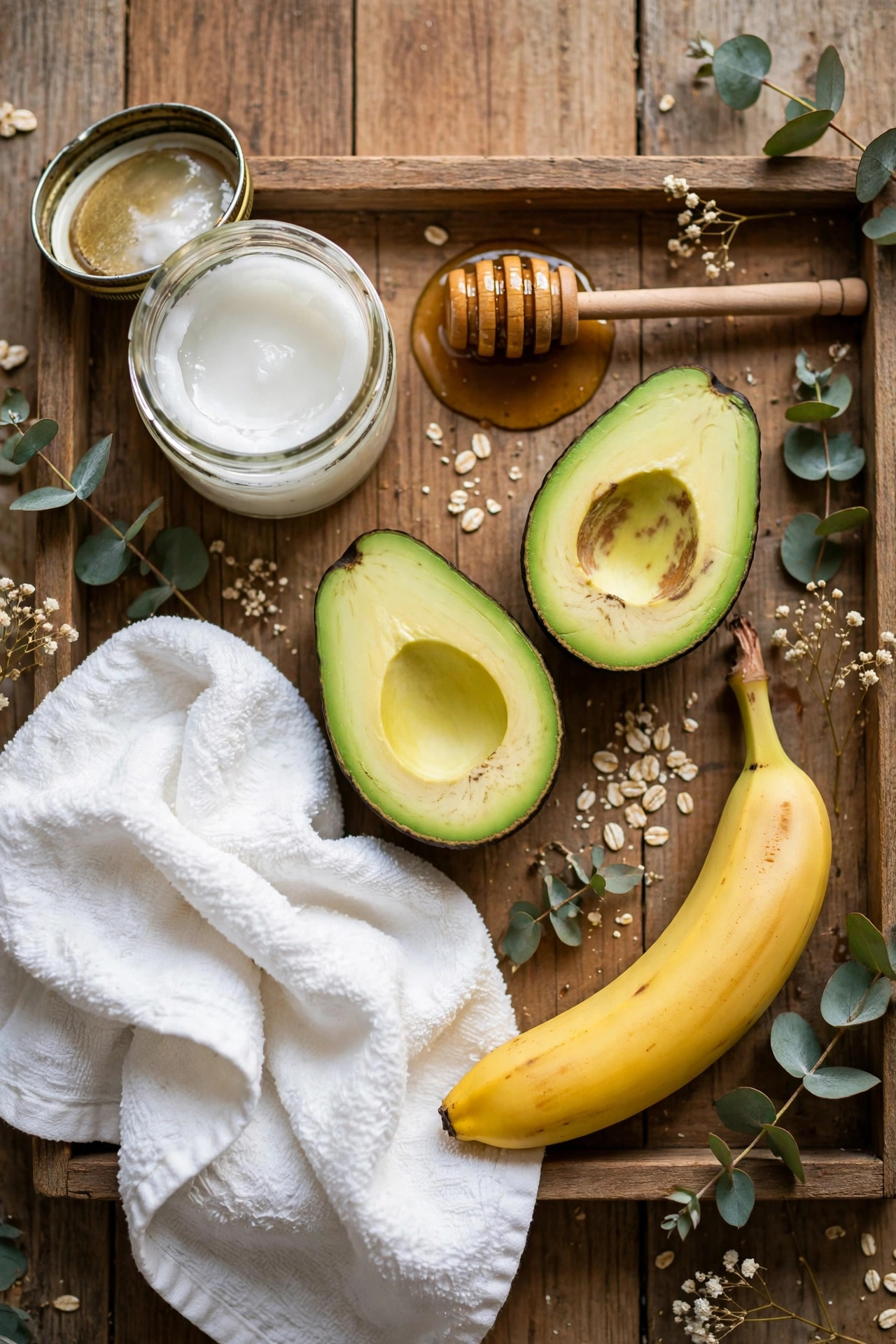
Salon hair masks cost $25 to $40 a jar and list ingredients you could find in your kitchen. The markup is packaging and perfume, not magic. A mashed avocado has the same fatty acids as the "avocado-infused deep conditioner" — because it is literally the same thing, minus the preservatives. This guide gives you four targeted DIY mask recipes for dry, oily, frizzy, and dull hair, plus a simple weekly routine that keeps your hair healthy for $25 total.
A quick honesty note before we start: DIY masks are conditioners, not chemistry. They moisturize, smooth, and add shine, and they do it well — but they cannot repair split ends (only a trim does that) or change your hair's texture. What they can do is make your hair noticeably softer, shinier, and more manageable for pennies per treatment. That is a great deal.
All four recipes below use the same eight grocery items, so one $25 shopping trip covers months of weekly masks. You will also learn the budget routine that surrounds the masks: how often to wash, the rinse trick that replaces expensive shine serums, and the two-dollar habits that matter more than any product.
What You'll Need
- Coconut oil, small jar $5
- Raw honey, squeeze bottle $6
- Ripe avocados (2) $3
- Bananas (2) $1
- Plain yogurt, small tub $3
- Apple cider vinegar $3
- Eggs, dozen $3
- Olive oil, small bottle $1
Step-by-Step
- Identify your hair's main complaint. Pick one: dry and brittle, oily at the roots, frizzy and flyaway, or dull and flat. Each recipe below targets one problem, and using the wrong one (like heavy coconut oil on already-oily roots) just creates new issues. When in doubt, start with the dull-hair shine mask — it suits almost everyone.
- Do a quick patch test. Dab a little of your chosen mask behind your ear and wait 15 minutes. Kitchen ingredients are gentle, but egg allergies and sensitivities to essential oils are real. This takes almost no time and saves you from a bad reaction on your whole scalp.
- Mix the dry-hair mask. Mash half a ripe avocado with 2 tablespoons of coconut oil and 1 tablespoon of honey until smooth. (Blend it if you can — avocado chunks are the number one complaint about DIY masks, and a blender fixes it.) Apply to damp hair from mid-length to ends, avoiding the roots. Wrap in a towel for 20 to 30 minutes.
- Mix the oily-scalp mask. Whisk half a cup of plain yogurt with 1 tablespoon of apple cider vinegar and one egg white. Massage into the scalp and roots only — this one is a scalp treatment, not a hair treatment. Leave for 15 minutes. The yogurt's lactic acid gently exfoliates the scalp while the vinegar balances pH.
- Mix the frizz-tamer. Mash one ripe banana with 1 tablespoon of honey and 1 tablespoon of olive oil until completely smooth — again, the blender is your friend. Smooth over damp hair, focusing on the frizziest sections. Cover with a shower cap for 20 minutes; the warmth helps the oils penetrate the hair shaft.
- Mix the shine-booster for dull hair. Whisk 2 tablespoons of honey with 1 tablespoon of apple cider vinegar and one whole egg. Apply to damp hair from roots to ends, leave for 15 minutes, then rinse with cool (not hot) water. Finish your shower with a final cool-water rinse — this closes the hair cuticle and is the free trick behind most "shine" products.
- Rinse properly and set your routine. Rinse masks with lukewarm water first (hot water cooks egg — truly, rinse cool for the egg masks), then shampoo as normal. Use one mask per week, rotating to your hair's needs. Between masks: wash 2 to 3 times a week max, sleep on a cotton or satin pillowcase, and trim every 8 to 10 weeks. That routine plus the masks beats any $40 product lineup.
Budget Breakdown
| Item | Cost |
|---|---|
| Coconut oil, small jar | $5 |
| Raw honey, squeeze bottle | $6 |
| Ripe avocados (2) | $3 |
| Bananas (2) | $1 |
| Plain yogurt, small tub | $3 |
| Apple cider vinegar | $3 |
| Eggs, dozen | $3 |
| Olive oil, small bottle | $1 |
| Total | $25 |
Before & After
Before these recipes, your haircare spending probably followed the familiar cycle: buy the promising $18 mask, use it three times, watch it gather dust while your hair stays exactly the same. Drugstore shelves are designed to make you feel one product away from good hair — and that feeling is the product.
After one month of weekly DIY masks, the change is tactile: hair that feels softer when you run your hands through it, less frizz on humid days, and actual shine without silicone serums. The photos do not lie either — the cool-rinse shine trick alone makes a visible difference in before-and-after shots.
The bigger shift is financial and psychological. You stop outsourcing your hair's health to marketing and start understanding what your hair actually needs: moisture, gentle cleansing, and regular trims. That knowledge is permanent, and it costs $25 once — not $25 every time a new jar launches.
Tips
- Use a blender for avocado and banana masks — chunks are hard to rinse out and the number one reason people quit DIY masks.
- Always rinse egg masks with cool or lukewarm water first. Hot water cooks the egg into your hair. Ask how I know.
- Apply masks to damp, not soaking-wet hair — sopping hair dilutes the mask before it can work.
- A shower cap or warm towel over the mask traps heat and roughly doubles how well the ingredients penetrate.
- Overripe bananas and avocados work better than perfect ones, so this is a great use for fruit you'd otherwise toss.
Frequently Asked Questions
- How often should I use a DIY hair mask?
- Once a week is the sweet spot for most hair types. Dry or damaged hair can handle twice a week; fine or oily hair should stick to once every 10 days and keep masks off the roots. More is not better — over-conditioned hair goes limp and flat.
- Can I store leftover mask for next week?
- Fresh-ingredient masks (avocado, banana, egg, yogurt) should be used immediately — they spoil like the food they are. Oil-and-honey mixes keep for a week in a sealed jar in the fridge. The simplest approach: mix only what you need each time, since every recipe makes roughly one application.
- Will coconut oil clog my pores or cause breakouts?
- It can if you leave it on your skin. Keep oil-based masks on your hair from mid-length down, not on your scalp or forehead, and rinse thoroughly. If you are acne-prone, tie hair up while the mask sits and wash your hairline with your regular cleanser afterward.